
The Alchemist
14/02/2026
The Alchemist
A Conversation Piece with Mindy Lee
A Conversation Piece with Mindy Lee
The Alchemist
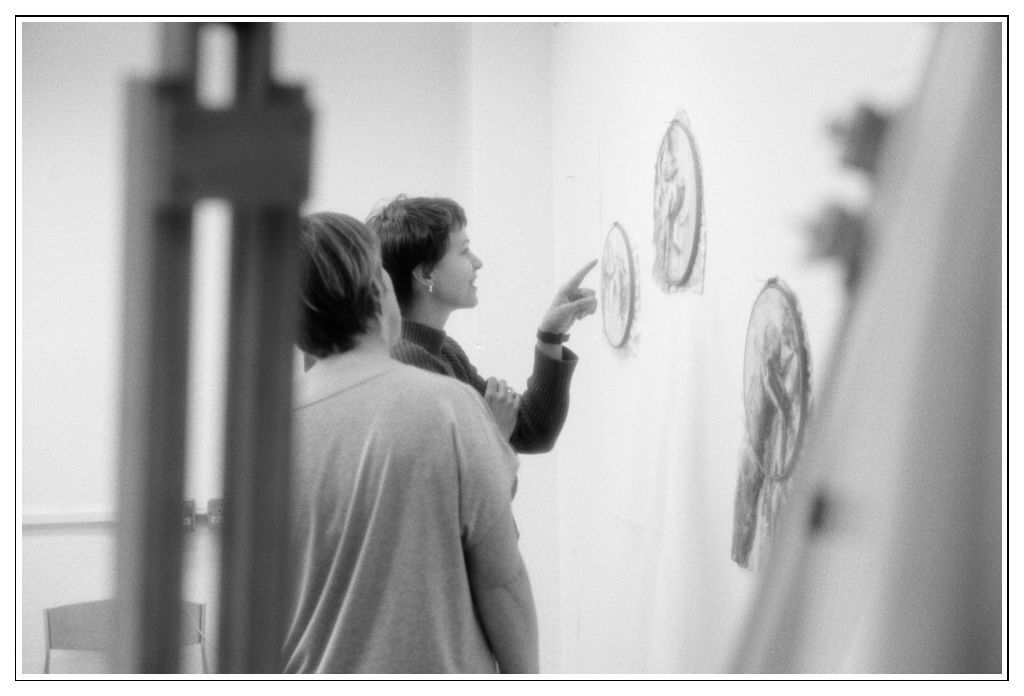
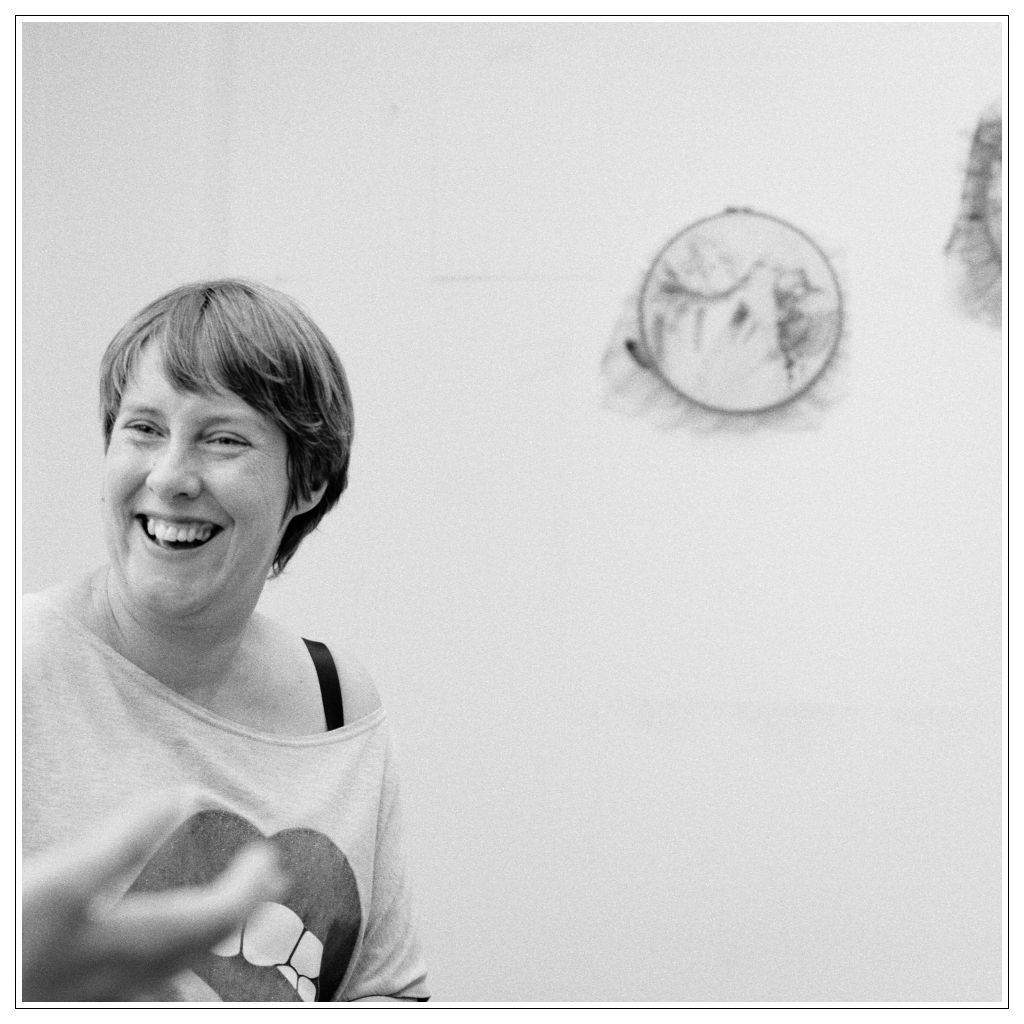
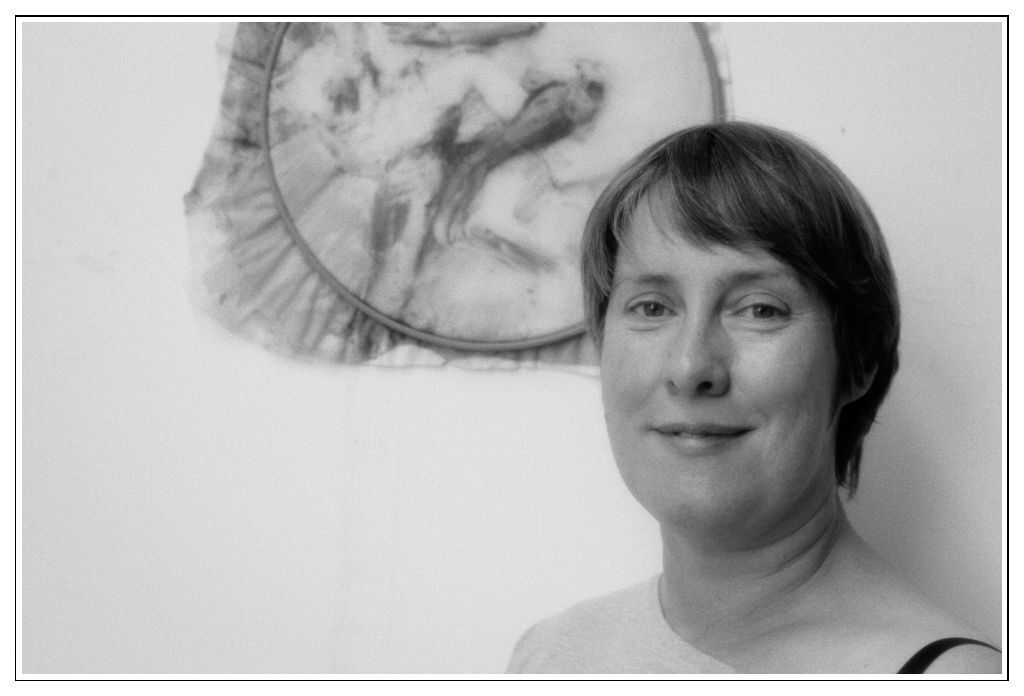
We met Mindy in a little studio full of folded easels, still-life props, brushes and paints and scraps of paper; a medium sized-room tucked away in the midst of a labyrinth of corridors at Imperial College, where Mindy has been the curator of the Blyth gallery for the last 20 years.
An artist as well as a curator, I was intrigued how that informed her practice or the way she sees art; and even before we met I got a glimpse to her thinking; she asked me to bring some of my work to hang along hers when we meet.
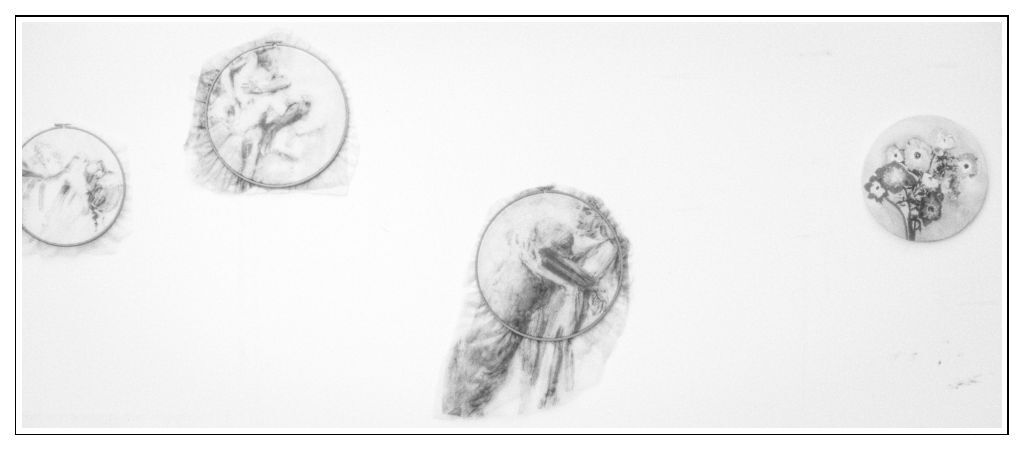
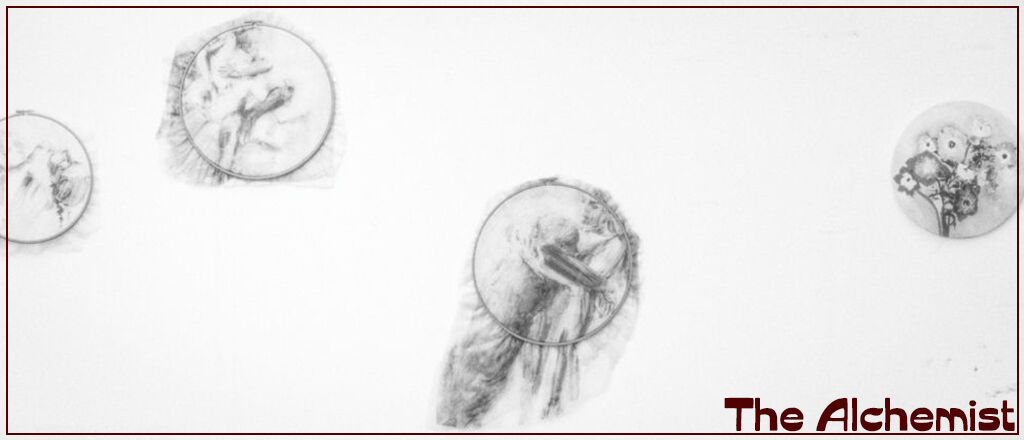
I brought one tondo flower painting and a sketch of my daughter, who fell asleep in an armchair, quickly drawn at the back of a weekly planner with a biro. I was in sync with Mindy who also brought a number of sketches of her son, as well as a trio of beautiful ephemeral paintings - objects - mostly triangular shapes of fabric, seemingly mid-flight, with brushstrokes that through an interplay at times reveal and at times make their subjects disappear.
The fabric is suspended in an embroidery hoop; colour matched to the paint; the painted scene sits mostly in the sphere of a tondo. As if saying; this is where the art happens, there is this border, but unlike with a painting on a stretcher, the contours of these painting-objects bleed into life, blurring the (arguably) arbitrary line between life and art.
They exist in relation to their environment; inviting it in, and in relation to one another. Fleeting moments; ten tries and one perfect take.
Mindy’s work is a very tactile reflection on motherhood and interconnectedness. Her paintings are read as visual pieces although the materials she chooses; layers of silk or satin have a very tactile quality to them, and feel ephemeral and fragile.
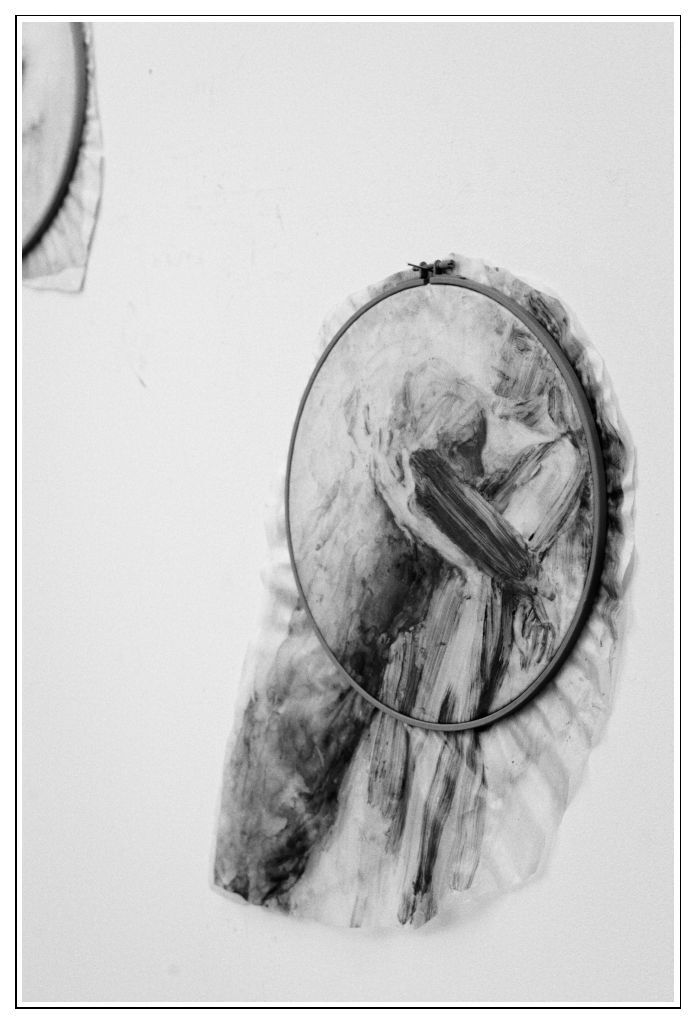
The drawings Mindy brought were a series of quick charcoal sketches with bright lemon yellow undertone in some areas. As if the sharpness of the black line on the white A4 format wasn’t enough; the yellow flickers beneath the lines and makes the white even crisper. It imbues the drawings with a kind of acid electricity.
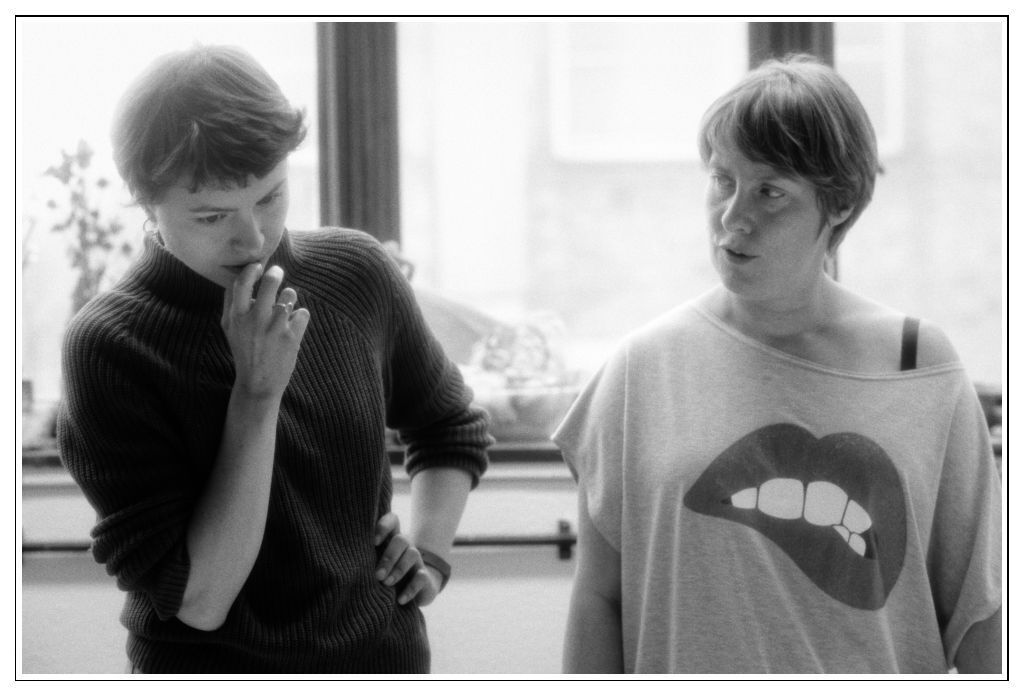
Mindy says she works very fast; almost as not to catch herself. Stretching a large piece of silk, almost re-creating the space of a sketchbook page, creating space that is free and where anything can happen. Including mis-takes; she paints the motif again and again until it becomes instilled in her and can be communicated in the simplest means possible. Out of the takes, Mindy says it usually is not the very last one, as that is somehow too resolved or ‘has lost its energy’. She chooses the one that captures the scene the best, and cuts it off.
“I stretch a lot of silk first, and it goes through a fast/slow process. So it’s a really slow, laborious process. Takes a lot of patience, … the tension to get the surface just right on a big square.. The [image is] somewhere in the middle, and then I work out how big the painting is going to be… They tend to get bigger and bigger and closer and closer each time I paint it.”
“So it’s this sort of an interesting free-flowing, fast process and then sort of [a slower] editing process, and then a framing process, in a way.”
Mindy agrees, “Yes and the tricky bit is, well, not being scared at the end.”
“Which part of the end?”
“To cut it.”
“To cut it? I would be terrified! I couldn’t work like this! I mean, it suits you and it’s wonderful and I love it, but like no, no, towards the end when it’s done..” I shake my head with the expression of horror and we both laugh.
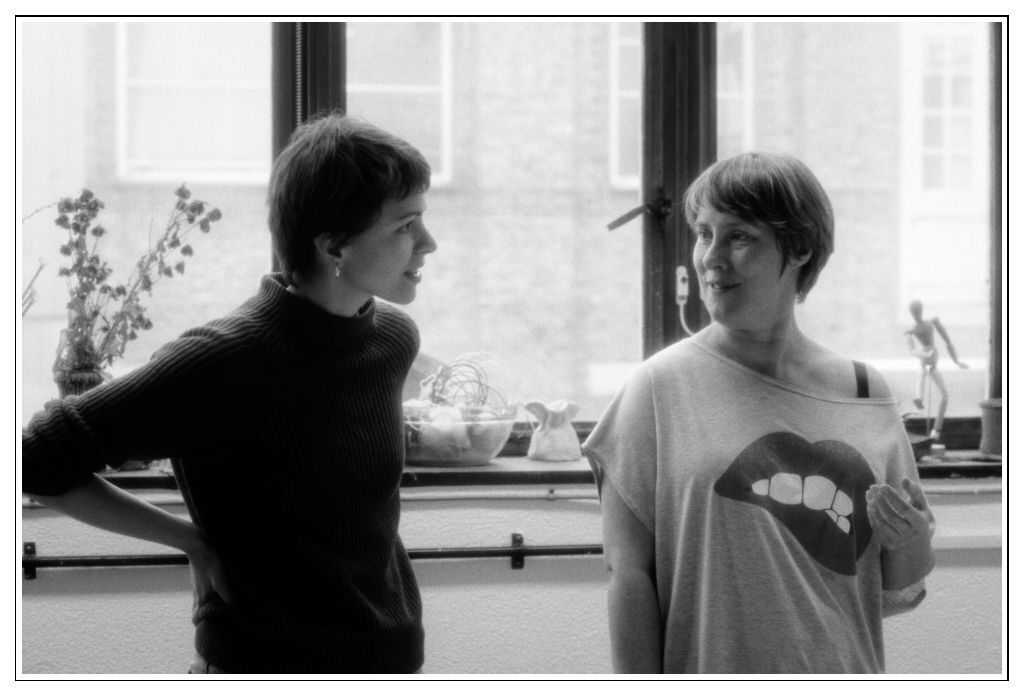
We sat down and I was reminded of all the other objects surrounding us; a wooden mannequin; clay creations on the window sill; the kind of ephemera that is essential to any public studio. A few floor above us is the Blyth Gallery and I was intrigued about the fact that Mindy as well as an artist has also been a curator or a part of the curatorial process for over twenty years there. I was curious how it has changed the way she sees individual artworks.
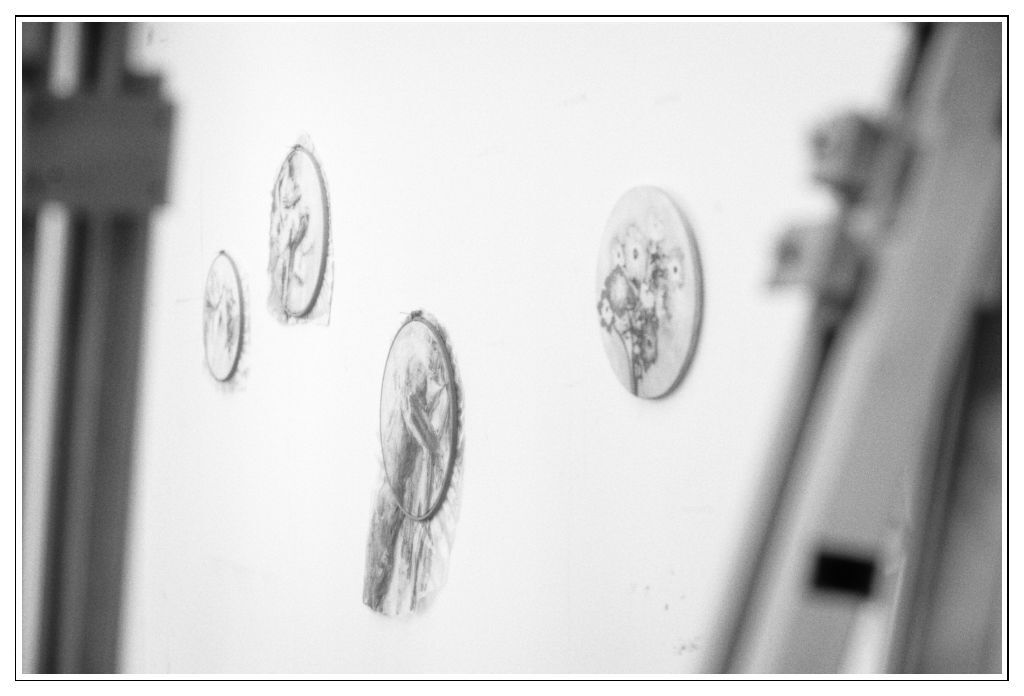
“I think I see them as something unfinished. And they finish when the viewer is there. It’s a part of the bigger experience, and so we get to see the work anew. [When you] see it in the studio, you know what you see, this is my world, and then we put it next to your world and it changes. Your world feeds my world and my world feeds your world. So, we pull out either complimentary elements together or the contrasting elements.”
I think what Mindy has found with her creative process, is also a reflection on what motherhood/parenting does. Pushed to our limits, the workings of our minds and hearts are exposed to the bones; there is a certain poetry to it; but it can be exasperating too. We have a potential to understand and grow from that experience; and it may not always be pretty but it is honest and real.
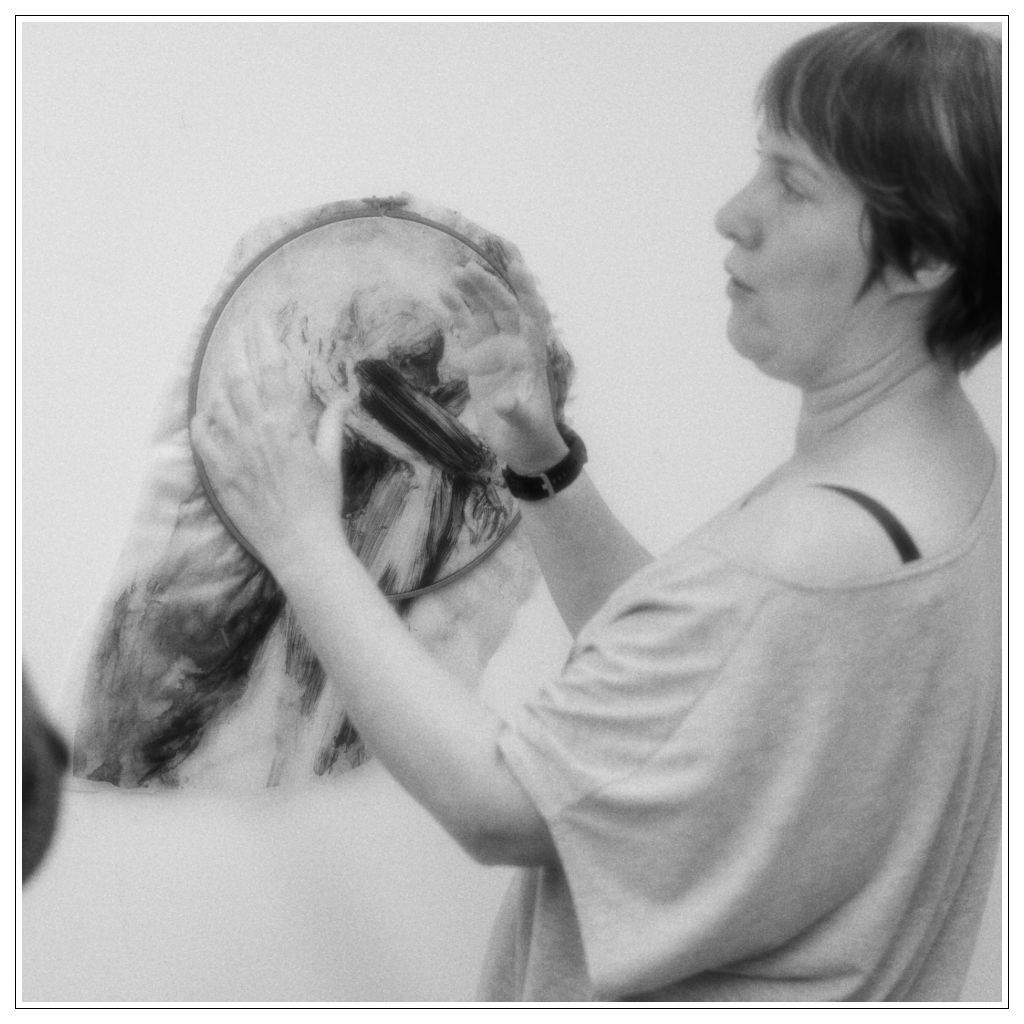
Mindy has learnt to accommodate the needs of her son; working now in short, quick outbursts; whenever she has the chance to. Having a home studio makes it possible; when you need to plan your day around your kid. And plan is maybe too hopeful a word sometimes; you need to improvise with whatever the day, how well planned or not, brings.
For Mindy, and this will be true for many parents, motherhood brought the need to create a new strategy, a new way of being in the world as well as of being an artist. She talked about refocusing, about abbreviating things, in order to get on the same wave-length and connect with her son. The figures in her paintings often seem to be alluding to moments of mothering; lifting a child up, carrying, of reaching out or trying to understand each other. The figures are in their own inner world, one that we get only glimpses of.
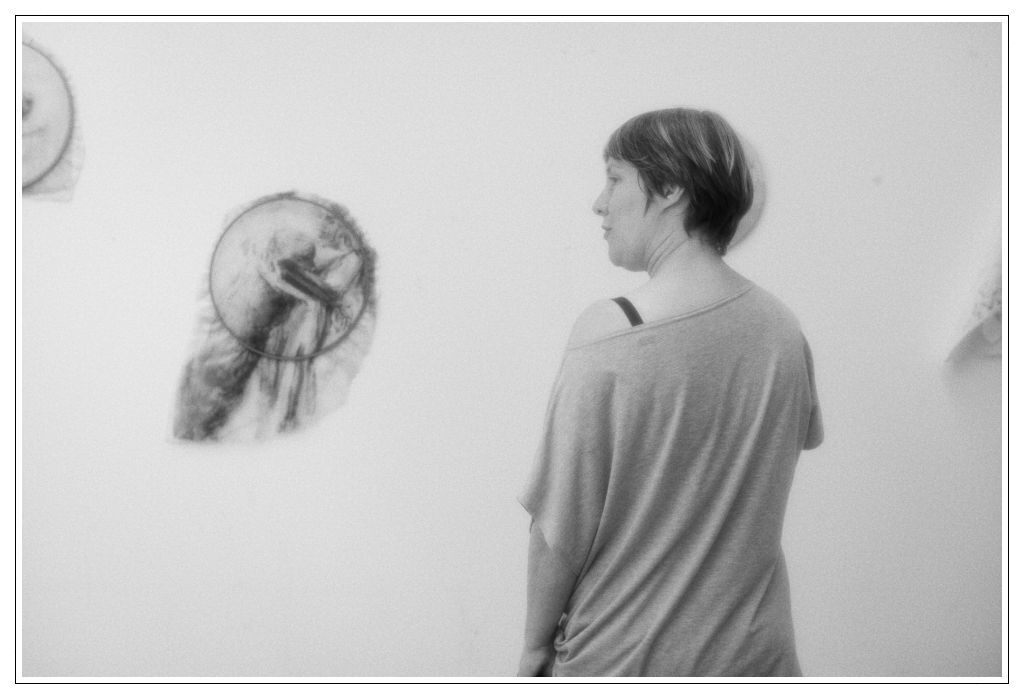
There is a mercurial quality to Mindy’s paintings. Both to the way the brush marks that teether on the edge of being incredibly detailed representations, of, say, an eye with eyelashes, and a simple gesture. But by looking at them we understand they are not laboured imitations neither a mere gesture; they are an immediate record; of the moment, of the image that is in her memory; personal and visual; the result of the interaction of the paint, its viscosity and ‘runniness’ to quote Mindy, and the way the surface is prepared to take the brush mark. There is a lot of alchemy happening to create something that is both simple & immediate and incredibly complex.
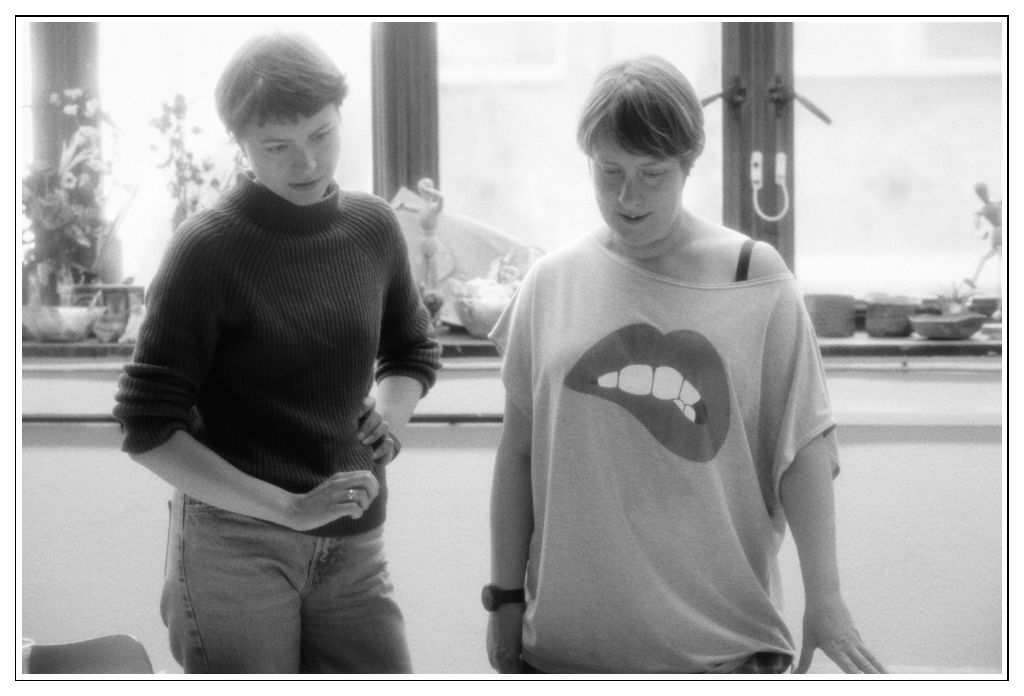
This to an extent is true to any painting, but Mindy’s process exposes the bare bones of what a painting is, as a process, as an object. As a result we are drawn to focus on those elements that are often out of our control. Mindy masterfully manages to create a process where she is in control; and at the same time doesn’t meddle with what happens that is magical and mysterious and often a result of a happenstance; one that Mindy is prepared to work with.
Text © Martina Šišková
Photographs © Jon C Archdeacon